
Compare before committing
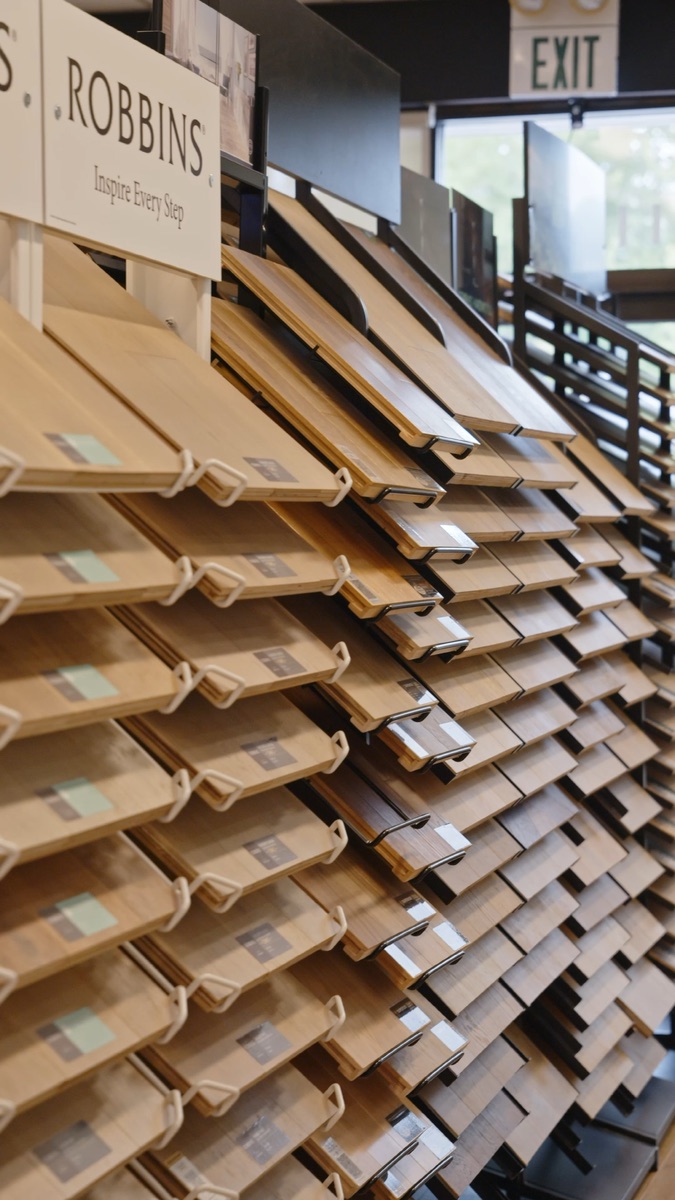
See available samples alongside cabinets, counters, tile and paint. Evaluate undertones and texture in person, then review the selected product in the lighting and conditions of your home.
Flooring products · preparation · installation
Real materials. Clear guidance. One coordinated flooring project.
Compare hardwood, luxury vinyl, laminate, carpet, tile and natural stone with guidance from our Kirkland Design Center.
Browse Flooring ProductsDisplays, samples and availability vary by collection. Call ahead to confirm a specific product or sample.
Products and installation
Find flooring that fits the room, the way you live, and the rest of your home. LeviArs Design & Remodeling helps you compare solid hardwood, engineered hardwood, luxury vinyl, SPC and WPC rigid-core options, laminate, carpet, carpet tile, porcelain, ceramic and natural stone.
At our Kirkland Design Center, compare available samples, surface textures, plank sizes and coordinated finishes. Buy materials for an approved order, plan supply and installation together, or start with a question about the right direction for your project.
We serve Kirkland, Bellevue, Seattle, Redmond and surrounding King and Snohomish County communities. Displays, inventory, special orders, lead times and product suitability are confirmed for the selected collection; this guide is not a live stock list.
See available samples alongside cabinets, counters, tile and paint. Evaluate undertones and texture in person, then review the selected product in the lighting and conditions of your home.
A floor quote should explain more than the price of a box. We help define material quantities, preparation, installation, transitions and finishing responsibilities so you can compare an actual project scope.
Connect material selection with our flooring installation and design support. Your project proposal identifies the team and any specialist coordination needed for the selected work.
Plan stairs, nosing, landings, trim and adjoining surfaces with the flooring. A coordinated finish is the goal; an exact color or grain match cannot be promised between different products or aged materials.
Start at the Design Center and keep the product, order and project questions connected. We review availability and documentation before ordering, then explain the next step for your scope.
We compare your room use, moisture conditions, subfloor, care preferences and budget. No material is the best choice for every room, and no floor is scratch-proof, flood-proof or maintenance-free.
Real wood
Compare species, grain, board cut, finish and construction. Real wood brings natural variation, with installation and renewal options that depend on the actual product.
One piece of natural wood, with character you can see and feel.
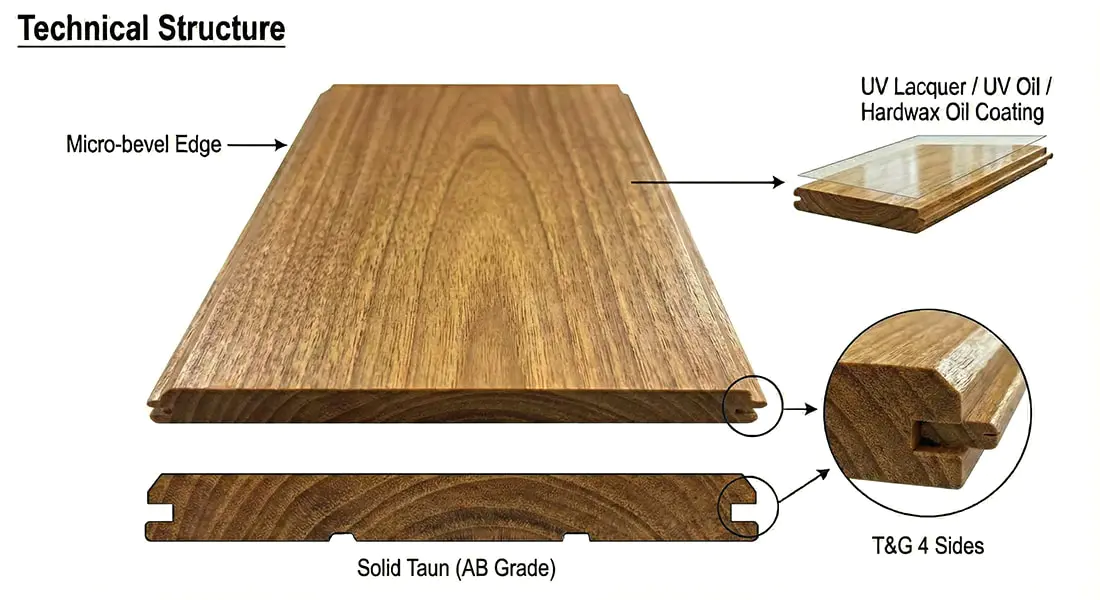
Solid hardwood is milled from one piece of wood through its thickness. It can create a continuous real-wood floor in living rooms, bedrooms, dining areas and hallways. Species, board cut, grade, width, surface texture and finish all influence the result. A suitable existing floor may be sanded and refinished, but usable wood above the tongue, previous sanding and damage must be evaluated first.
Reasons to consider it
Natural grain; site-finished or prefinished choices; potential for future refinishing; coordination with wood stairs and trim.
Wood responds to humidity and moisture. Below-grade rooms, wet areas and radiant heat need explicit product approval. Do not assume a solid plank is suitable just because the species is hard.
Illustrative layers; the selected product and installation may differ.
Nail or staple installation is common over approved wood subfloors. Other methods require the product manufacturer’s written approval. Moisture readings, site conditions, acclimation and fastener details are confirmed for the actual floor.
Use finish-approved cleaners, remove grit, wipe spills promptly and protect furniture contact points. Refinishing and recoating are different services.
Further reading: NWFA: choosing solid and engineered wood · NWFA: hardness and durability · NWFA: wood-floor maintenance
A real-wood surface over a supporting multi-layer construction.
Engineered hardwood combines a real-wood face with a backing designed to improve dimensional stability. A core may use cross-laminated wood, plywood or another specified construction. Three-ply is one example, not the definition of every engineered floor. Compare the face thickness, overall thickness, core, grade, finish and installation instructions rather than choosing by appearance alone.
Reasons to consider it
Real-wood appearance; wide-plank choices; more installation options in selected products; useful for coordinated whole-home interiors.
Engineered wood is not automatically waterproof. Basement or radiant-heat suitability must be confirmed. Refinish potential depends on the usable face, construction, damage and previous sanding—not simply total plank thickness.
Illustrative layers; the selected product and installation may differ.
Nail/staple, approved glue-assist, full-spread adhesive or floating installation may be available, depending on the exact product. A click profile is not present on every engineered floor.
Use the finish maker’s maintenance system. Ask about allowable recoating or sanding before purchasing a floor where future renewal is important.
Further reading: NWFA: choosing solid and engineered wood · NWFA: wood-floor maintenance
Luxury vinyl
LVP and LVT describe plank and tile formats. SPC and WPC describe constructions within luxury vinyl. Compare the complete floor, including its core, wear layer, backing and approved installation.
Wood-look planks and tile-look formats within the luxury-vinyl family.
LVP means luxury vinyl plank; LVT means luxury vinyl tile. They describe product formats, not one single core construction. Luxury vinyl includes flexible glue-down products as well as rigid-core floors, including SPC and WPC. Compare the finish, wear layer, total thickness, texture, backing and approved installation method of the specific collection.
Reasons to consider it
Many wood and stone visuals; routine cleaning without wood refinishing; options for busy rooms and spaces where a vinyl product is approved.
A water-resistant or waterproof product claim does not make a room waterproof or fix subfloor moisture. Scratch, stain, indentation, sun and heat performance are product-specific. Wear-layer thickness is not the same as overall thickness.
Illustrative layers; the selected product and installation may differ.
Flexible glue-down vinyl needs a suitably smooth, prepared base because irregularities can show through. Floating or loose-lay products follow their own expansion, adhesive and underlayment requirements.
Follow the selected product’s cleaner, mat and furniture-protector guidance. Do not assume steam cleaning, rolling loads or wet-room use is permitted.
Further reading: Shaw: vinyl overview · Karndean: Lago Quartzite gluedown product · Karndean: Lago Quartzite rigid-core product · MSI: luxury vinyl categories and collection documents · Mannington: vinyl-plank flooring guide
A dense rigid-core option within luxury vinyl—not a separate natural-stone floor.
SPC is commonly described as stone-plastic, stone-polymer or solid-polymer composite, depending on the manufacturer. It usually has a dense mineral-filled polymer core. Many SPC floors use a locking joint and may have an attached pad. The décor is a printed visual; a wood-look SPC plank is not hardwood.
Reasons to consider it
Rigid construction; many wood and tile visuals; a practical comparison option for approved residential or commercial settings.
Rigidity does not make a floor scratch-proof or remove the need for a flat base. Point loads, joint design, expansion, heat exposure and product instructions still matter. It may feel firmer than some foamed-core products.
Illustrative layers; the selected product and installation may differ.
Review subfloor flatness, moisture, joint condition, approved backing and expansion details. Do not automatically add a second pad under a floor with attached backing.
Use product-approved care and protect against abrasive grit and concentrated loads. Confirm the complete installed assembly for the room.
Further reading: Shaw: vinyl overview · MSI: luxury vinyl categories and collection documents · Mannington: vinyl-plank flooring guide
A foamed composite core often selected for a more cushioned feel.
WPC is a manufacturer-used category commonly associated with wood-plastic composite or waterproof-core vinyl. Modern formulations differ and may not contain wood. The useful comparison is the exact foamed-core construction, wear layer, backing, locking system and product documentation.
Reasons to consider it
Often a more cushioned feel than dense SPC; many residential wood-look options; backing and assembly options that may help sound performance.
Comfort, acoustics and indentation resistance vary by product. A thicker floor is not automatically more durable, and a water claim does not cover every leak, flooding event or subfloor condition.
Illustrative layers; the selected product and installation may differ.
Use only the manufacturer-approved attachment and underlayment. Confirm flatness, moisture, transitions, heavy fixtures and allowable room conditions before scheduling.
Protect against grit and concentrated loads; follow the collection’s cleaning and warranty instructions.
Further reading: Shaw: vinyl overview · MSI: luxury vinyl categories and collection documents · Prima Floors: product categories · Mannington: vinyl-plank flooring guide
Laminate
A printed surface, realistic texture and a protective overlay. Review the selected collection’s wear, moisture and installation requirements alongside its appearance.
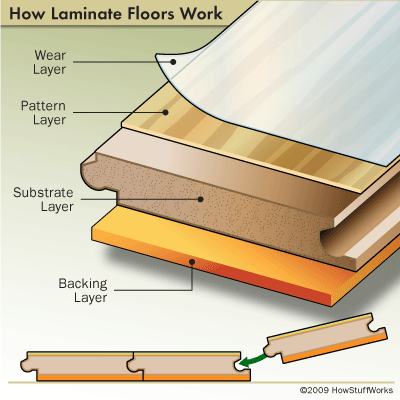
A decorative image and protective overlay over a wood-fiber core.
Laminate uses a printed design layer beneath a durable overlay, typically supported by a high-density wood-fiber core and balancing layer. It is not engineered hardwood because it does not have a real-wood wearing face. Embossing, pattern variety, edge detail and sheen affect how realistic the selected design looks.
Reasons to consider it
Many wood and stone visuals; useful wear-performance choices; options across several project budgets.
Traditional and water-resistant or waterproof-rated laminate are not interchangeable. Wet-area approval, sealing details, spill limits and exclusions depend on the collection. An AC abrasion class is not a universal scratch-proof rating.
Illustrative layers; the selected product and installation may differ.
Floating click installation is common, but the product controls underlay, perimeter and fixed-cabinet details. Protect the core and joints according to the written instructions.
Do not sand laminate to change its color. Follow the specified cleaning method; steam-cleaning approval for one collection does not transfer to another.
Further reading: Mannington: Restoration Collection laminate
Tile & stone
Choose a floor-rated surface and plan the whole assembly, from the supporting base to grout, transitions and any required waterproofing.
Explore tile installation →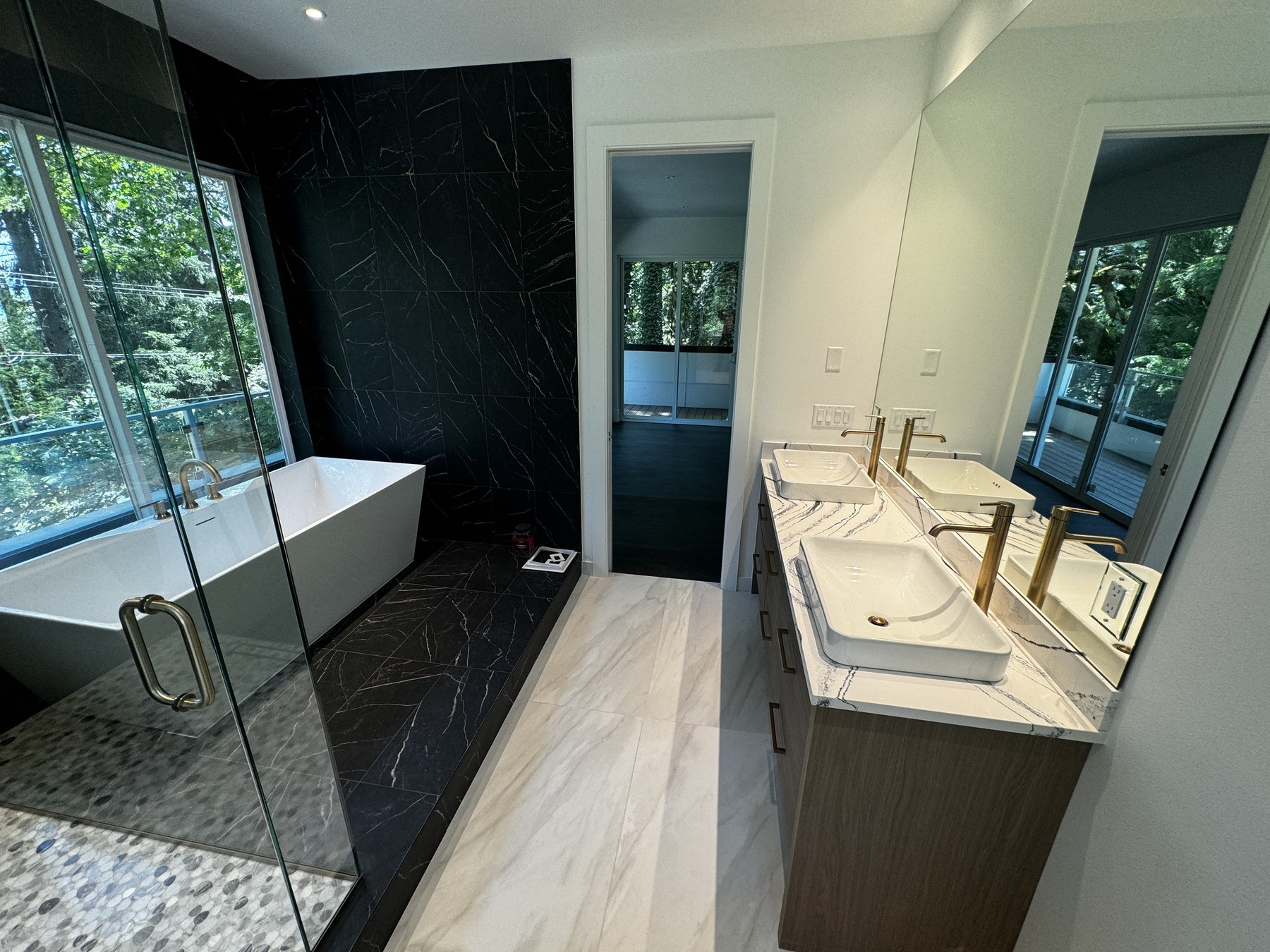
A fired ceramic material with many surface designs and floor formats.
Porcelain offers a wide range of stone, concrete, wood and decorative looks. Compare the exact product’s floor rating, finish, dimensions, thickness and approved exposure. A polished tile and a textured tile may suit different applications; the porcelain name alone does not establish slip performance or suitability for every location.
Reasons to consider it
Broad design range; hard wearing surface; options for entries, kitchens, laundry rooms and bathrooms when rated for the intended use.
Tile is a hard surface, and the installation must support it. Grout and tile do not replace waterproofing in a shower. The whole assembly, including movement accommodation and transitions, matters.
Illustrative layers; the selected product and installation may differ.
Preparation, mortar, underlayment, pattern, edge profiles and grout are selected together. Heated floors require a compatible system and the required testing and cure sequence.
Use tile- and grout-appropriate cleaners. Sealing is required only where specified for the chosen tile, grout or finish.
Color and pattern options, with floor-rated products chosen for the room.
Ceramic tile includes many decorative styles, but not every ceramic wall tile is rated for a floor. We review intended use, thickness, finish, care and the supporting assembly before confirming a floor selection. Matching wall tile can be coordinated without assuming both products have the same performance.
Reasons to consider it
Versatile colors and patterns; coordinated floor-and-wall collections; options for traditional and contemporary interiors.
Product rating, not appearance, determines the approved application. Wet-floor conditions, drain details and transitions require project-specific planning.
Illustrative layers; the selected product and installation may differ.
The layout considers joints, perimeter cuts, movement, edges and adjoining surfaces. The substrate is prepared before setting; grout is not a remedy for an unsuitable base.
Follow collection and grout guidance. Avoid treating a general-purpose sealer as a substitute for waterproofing.
Distinctive mineral variation with care tailored to the actual stone.
Marble, travertine, limestone, slate, granite and quartzite each have different properties. Natural color, veining, surface texture and thickness variation affect the selection and layout. Natural quartzite is different from engineered quartz, and one stone’s maintenance requirements do not apply to all the others.
Reasons to consider it
Individual mineral character; choices from understated honed surfaces to textured or polished designs; coordinated feature areas where approved.
Review support, weight, finish and exposure. Marble and limestone are acid-sensitive. An appropriate sealer can help with staining but does not stop acid etching or make the installation waterproof.
Illustrative layers; the selected product and installation may differ.
Verify the exact stone, backing, substrate, setting materials and layout. Additional structural preparation or specialist handling may be required for the selected system.
Use stone-safe cleaners and the stone supplier’s maintenance instructions; reseal only where recommended.
Carpet
Compare soft surfaces by fiber, construction, backing, cushion and room use. Think through patterns, seams, stair details and everyday care.
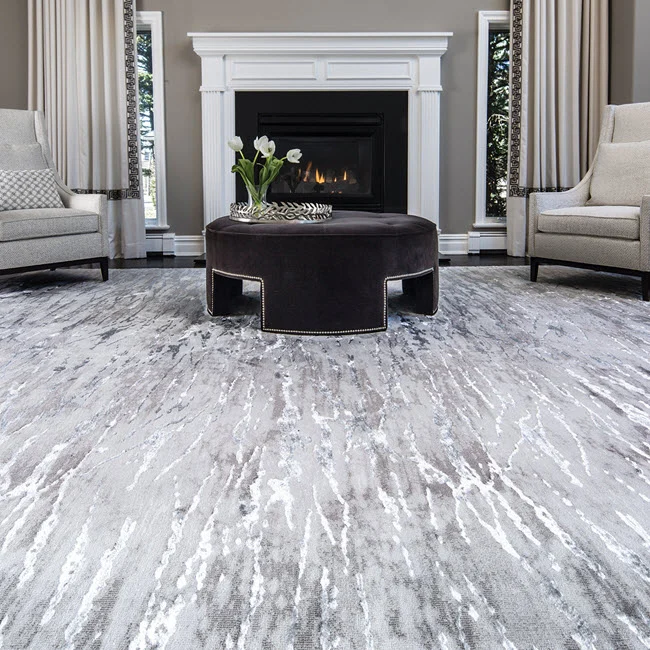
Soft texture, pattern and underfoot comfort for suitable interior spaces.
Carpet offers a different feel from hard flooring for bedrooms, living spaces and selected stairs. Compare fiber, pile, density, texture, pattern, backing and cushion rather than choosing from color alone. Wool, nylon, polyester and other specified fibers have different care and performance characteristics; the product data determines the actual offering.
Reasons to consider it
Softness; warmth underfoot; a range of patterns and textures; room-specific cushion options.
Stain resistance is not stain immunity. Moisture conditions, pets, cleaning and seam locations deserve discussion. Confirm the manufacturer, fiber and available collection before ordering.
Illustrative layers; the selected product and installation may differ.
Plan direction, seams, stretching or adhesive method, cushion and transitions for the selected carpet. Stair work is a separately defined installation scope.
Vacuum and maintain according to the selected fiber and warranty; address spills promptly and use approved professional cleaning where required.
Further reading: Carpet and Rug Institute: selecting carpet
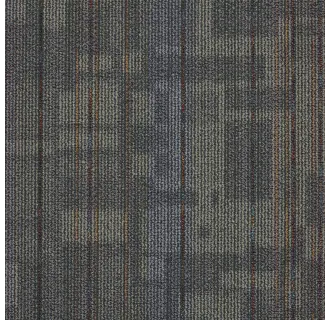
Modular soft flooring for layouts that benefit from replaceable units.
Carpet tile uses modular units with an integrated backing. It can suit home offices and approved commercial areas where layout, maintenance and selective replacement matter. Compare the specified use class, backing, adhesive system, pattern direction and maintenance requirements. Not every carpet tile is approved for every commercial setting.
Reasons to consider it
Modular layouts; patterns and directional effects; the option to replace selected units when matching material is available.
Backing and adhesive must suit the subfloor and measured conditions. Replacement tiles may show lot or wear differences. Keep spare material when appropriate to the project.
Illustrative layers; the selected product and installation may differ.
Prepare the base, establish layout lines, use the specified adhesive or installation system and coordinate edges, transitions and occupied-area access.
Use the manufacturer’s vacuuming, spotting and extraction guidance; identify high-traffic areas and maintenance needs before selection.
Further reading: Carpet and Rug Institute: selecting carpet
Side by side
No category has a universal waterproof, scratch-proof or quietest rating. Compare the actual product and assembly.
| Material | Wearing surface | Water & room-use check | Renewal approach |
|---|---|---|---|
| Solid hardwood | Real wood | Humidity-sensitive; approved location required | Recoat/refinish only after assessment |
| Engineered hardwood | Real-wood face | Construction adds stability, not automatic waterproofing | Usable face and product determine sanding |
| LVP / LVT | Printed décor + wear layer | Read water, heat and use limits | Clean or replace; not wood sanding |
| SPC | Luxury-vinyl rigid-core product | Rigidity does not prevent every type of damage | Product-specific repair or replacement |
| WPC | Luxury-vinyl foamed-core product | Water claims do not eliminate subfloor checks | Product-specific repair or replacement |
| Laminate | Printed layer + overlay | Water performance depends on collection and installation | No conventional wood refinishing |
| Porcelain / ceramic | Fired tile surface | Floor rating, finish and assembly govern suitability | Tile and grout care; local repairs when feasible |
| Natural stone | Natural mineral surface | Stone and finish determine use and maintenance | Stone-specific restoration where appropriate |
| Carpet / carpet tile | Textile face | Keep the base dry; check fiber, backing and use class | Approved cleaning or replacement |
Species, grain & character
Janka measures the comparative indentation resistance of a solid-wood specimen. It does not measure finish scratching, water resistance, sound or an engineered floor’s complete performance.
These approximate published values use pounds-force (lbf), not psi. Appearance varies with grade, cut, finish and lighting. This guide includes common and specialty woods; it is not a list of current LeviArs inventory.
| Species | Janka (lbf) | Typical appearance | Buying consideration | Source |
|---|---|---|---|---|
| White oak | 1,360 | Tan to medium brown; visible grain and ray character. | Versatile color direction; review cut, grade and samples. | R4, R5 |
| Red oak | 1,290 | Warm pinkish or reddish undertones; open grain. | Familiar flooring character; stain samples help assess undertones. | R4, R5 |
| Hickory / pecan | 1,820 | Pronounced light-to-dark variation and bold grain. | Harder comparative species; select the amount of character you prefer. | R4, R5 |
| Hard / sugar maple | 1,450 | Pale tones and relatively fine grain. | Clear visual direction; stain behavior and grade need sample review. | R4, R5 |
| American black walnut | 1,010 | Chocolate-brown heartwood with lighter sapwood. | Softer than oak; natural color variation is part of the choice. | R4, R5 |
| American black cherry | 950 | Warm reddish tones and a finer grain. | Color develops with light and time; softer than oak. | R4 |
| American beech | 1,300 | Pale tan with a pink cast and fine texture. | A different grain character from oak; verify available collections. | R4 |
| Yellow birch | 1,260 | Pale golden to reddish-brown variation. | Distinguish yellow birch from other birch species. | R4, R5 |
| White ash | 1,320 | Lighter tones with pronounced grain. | Use the exact species: ash hardness varies. | R5 |
| Green ash | 1,200 | Light to medium brown, open grain. | Reference value differs from white ash. | R4 |
| True teak | 1,155 | Golden to deeper brown and distinctive grain. | Specialty selection; verify identity and finishing compatibility. | R6 |
| Brazilian cherry / jatoba | 2,350–2,820* | Orange-brown to deep reddish-brown; may darken. | Published reference values differ; confirm the selected supplier’s data. Not American cherry. | R18, R19, R20 |
| Ipe / Brazilian walnut | 3,684 | Dense, darker brown wood. | Not American walnut; specialist sourcing and installation review. | R6 |
| Mesquite | 2,345 | Warm brown, frequently expressive grain and character. | Specialty availability, lengths and grade must be confirmed. | R6 |
| Heart pine | 1,225 | Amber tones and prominent growth-ring character. | Trade description varies; reclaimed condition must be assessed. | R6 |
| Southern yellow pine | 870 | Yellow to amber with prominent grain. | Species group; published values vary and dents can become patina. | R6 |
| Douglas-fir | 660 | Warm amber to reddish tones, often strong linear grain. | Softer comparative reference; review wear expectations. | R6 |
| Eastern white pine | 380 | Light, soft-looking grain with possible knots. | Softwood character; much lower dent resistance than oak. | R6 |
| Cumaru / Brazilian teak | 3,540 | Rich tan to brown with distinctive grain. | Not true teak; use the specified product’s installation guidance. | R18 |
| Tigerwood / muiracatiara | 2,160 | Golden-brown tones with darker striping. | High visual variation; review a representative sample spread. | R18 |
| Tauari / Brazilian oak | 1,460 | A lighter tropical wood often sold under an oak trade name. | Not the same botanical wood as American white or red oak. | R18 |
| Garapa / Brazilian maple | 1,650 | Golden tones; the trade name does not make it hard maple. | Confirm botanical identity and supplier specification. | R18 |
| Sucupira / Brazilian chestnut | 3,330 | Generally darker brown with strong character. | Manufacturer reference; compare the exact product and species. | R18 |
*The jatoba range summarizes differing published values of 2,350, 2,690 and 2,820 lbf. It is not a certified test range for a particular product. Other species references also vary by exact wood and source; confirm the selected supplier’s data.
From selection to handover
A clear sequence, matched to your rooms and your flooring.
Your proposal defines the products, preparation, installation method and finishing responsibilities for your project.
Tell us the rooms, flooring direction and contact information. An initial discussion identifies the appropriate next step and any consultation or measurement arrangements.
Evaluate visible conditions, room dimensions, stairs, doors, transitions and items that remain. Concealed conditions are reviewed if exposed later.
Review samples, specifications, finishes and care alongside cabinets, tile and paint. Confirm which products are available to order and which displays are currently on site.
Identify products, quantities or allowances, removal, preparation, installation and finishing. Set responsibilities for belongings, appliances, delivery and any separately scoped trades.
Review the written scope, availability and project sequence. Inspect deliveries and follow the selected product’s site-conditioning and acclimation requirements; elapsed days alone do not establish readiness.
Agree access and belongings arrangements; protect retained surfaces, plan dust control and carry out scoped removal. Dust control reduces exposure; it is not a promise of a dust-free project.
Use the tests and acceptance limits required for the flooring and installation system. Review moisture and flatness; specify compatible repair, flattening, vapor-control or acoustic components where needed.
Plan direction, joints and cuts. Follow the product’s attachment, adhesive, underlayment and expansion requirements. A board-width rule or a single sealer cannot replace the actual system specification.
Install agreed nosing, transitions, baseboards and other details. Confirm movement allowances and clearances; discuss any limitations to matching products or existing finishes.
Review the finished scope, cleanup, product records and return-to-use restrictions. Explain the separate workmanship and product coverage in the project documents and how to report a concern.
Prepare for the project
Materials, preparation and finishing details all affect the final result. Review them together before work begins.
The right method follows the product and supporting assembly.
Approved click or floating products join to one another rather than being fastened through every plank. The specified base, pad, expansion details and fixed-cabinet rules still apply.
Use approved mechanical fasteners for the specified wood product, subfloor and site. Fastener type and spacing are not determined by a universal seven-inch plank-width rule.
Supplement mechanical fastening with compatible adhesive only where the product and assembly permit or require it. There is no universal ten-inch trigger for every board.
Spread the approved adhesive for the product and substrate, including its moisture limits, trowel, open time and curing rules. Concrete does not automatically require this method for every flooring category.
Tile needs a suitable setting and movement-joint assembly; carpet and carpet tile use their specified backing, cushion or adhesive method. They are not installations of wood planks with different finishes.
Ask for a material-only quote, supply and installation together, or a review of flooring you plan to purchase elsewhere. Acceptance, availability and responsibilities are confirmed before ordering or scheduling.
Contractors can request product information, quantities and supply coordination for their own installation crews. For contractor-referred customers, material selection and supply support the referring contractor’s project; installation arrangements remain with that contractor.
Visit the Design Center →Moisture testing, vapor control, acoustic backing and surface preparation solve different problems. A sealer does not automatically replace an approved underlay, moisture-mitigation assembly or compatible adhesive. Your proposal identifies the products and manufacturer-approved combination for your floor.
An existing wood floor may need maintenance, recoating, sanding or replacement. We review finish compatibility, remaining wood and damage before agreeing on a renewal scope. Plan stairs, landings and transitions with the floor; matching depends on the actual products, samples and existing conditions.
Review product and quantity, ordering allowance, removal and disposal, preparation, moisture or acoustic components, installation, transitions, baseboards and stair work. Furniture, appliance and trade responsibilities are included as written. Concealed conditions and requested changes are reviewed before additional work proceeds.
Selection, ordering and conditioning are separate from on-site work and return-to-use time. We discuss room closures, furniture, pets, access and phased work where practical. Coatings, adhesives, grout and heating systems have their own cure and activation requirements.
The selected manufacturer’s warranty and LeviArs’ applicable workmanship terms are separate. Review coverage, exclusions, maintenance and the claims process in your project documents. Coverage depends on the product and agreed scope.
Product selection
Explore flooring, stair and material options from the names below. Our list includes manufacturers, distributors and specialist suppliers. Ask the Design Center about available collections, samples and ordering options for your project.
Completed LeviArs projects
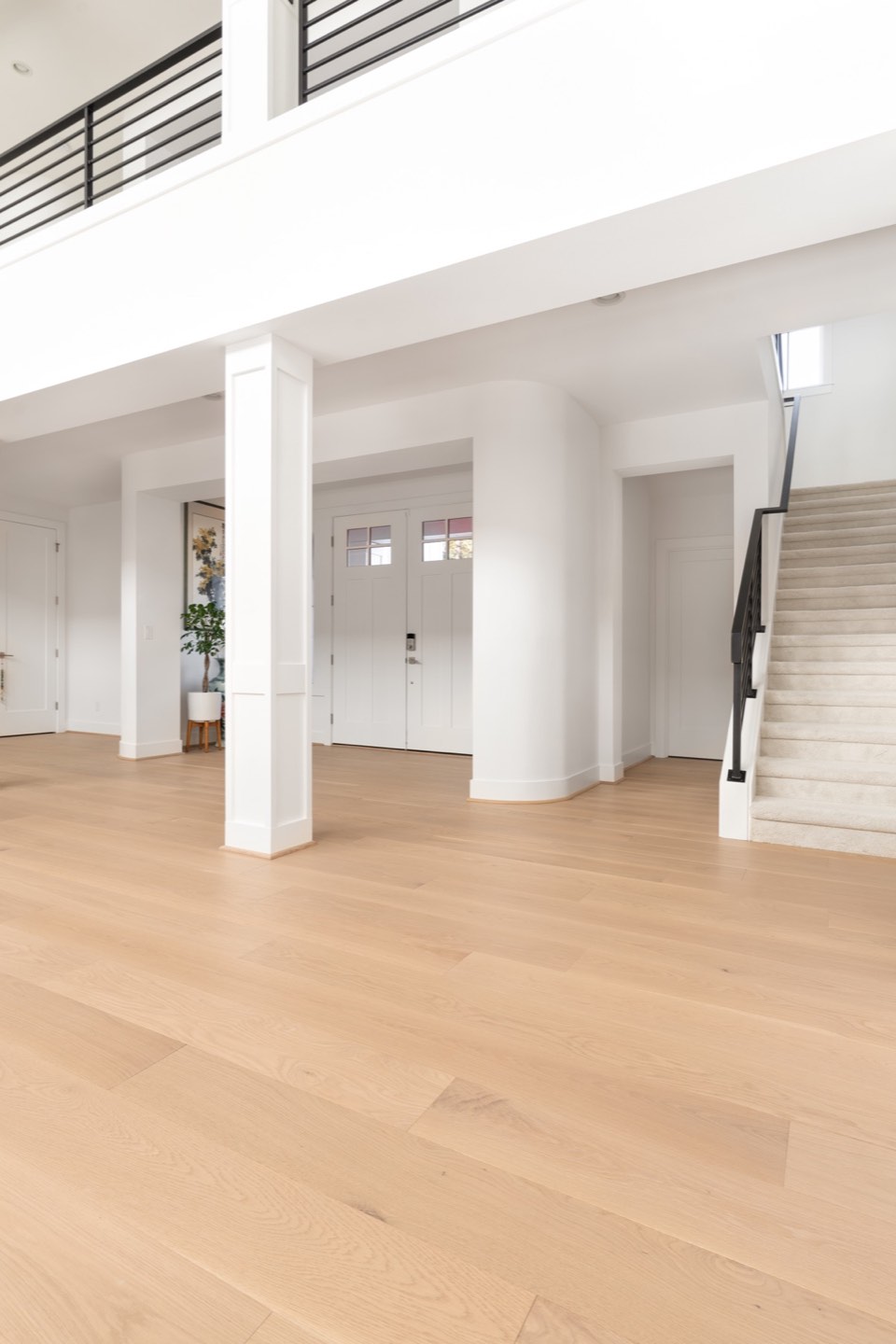
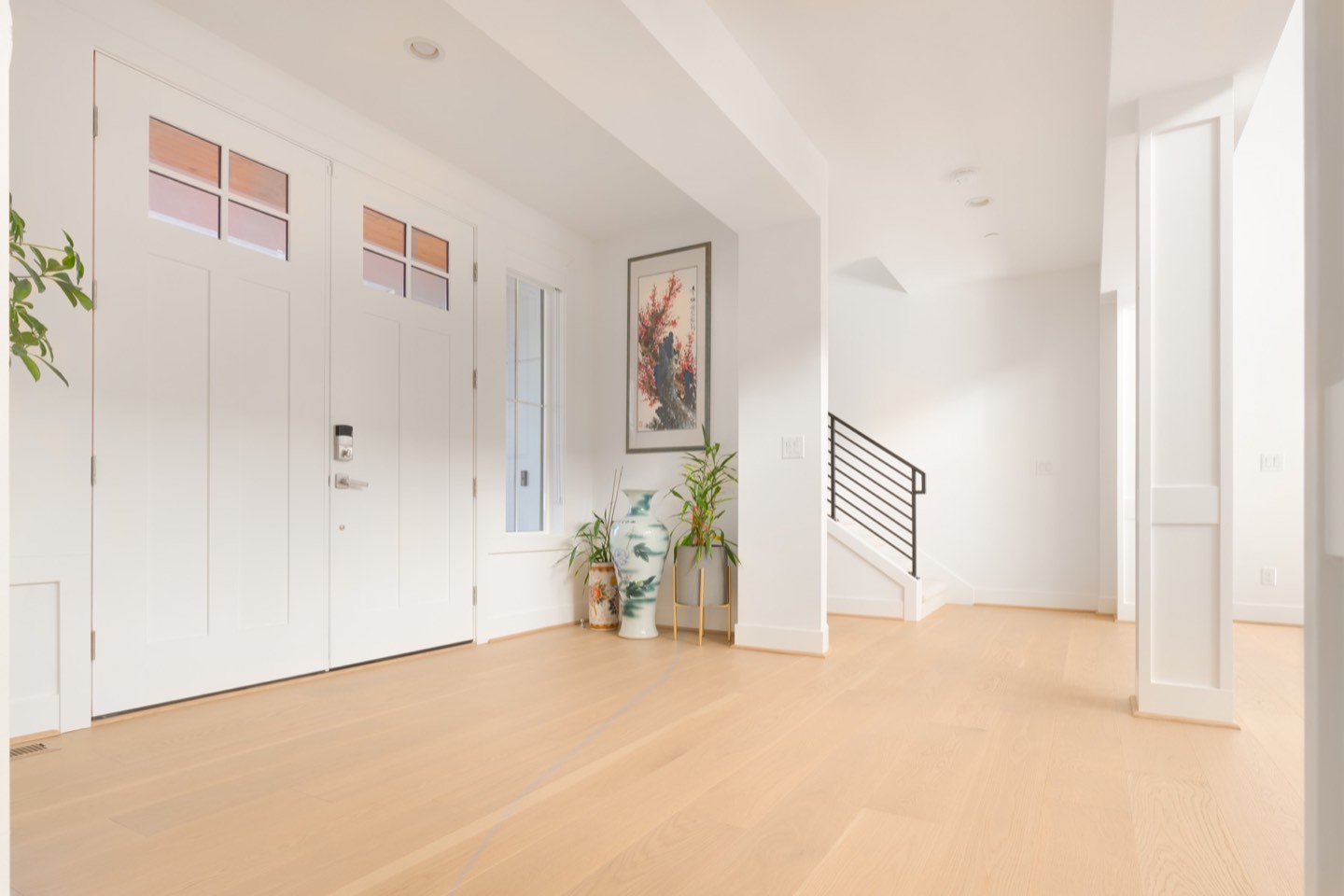
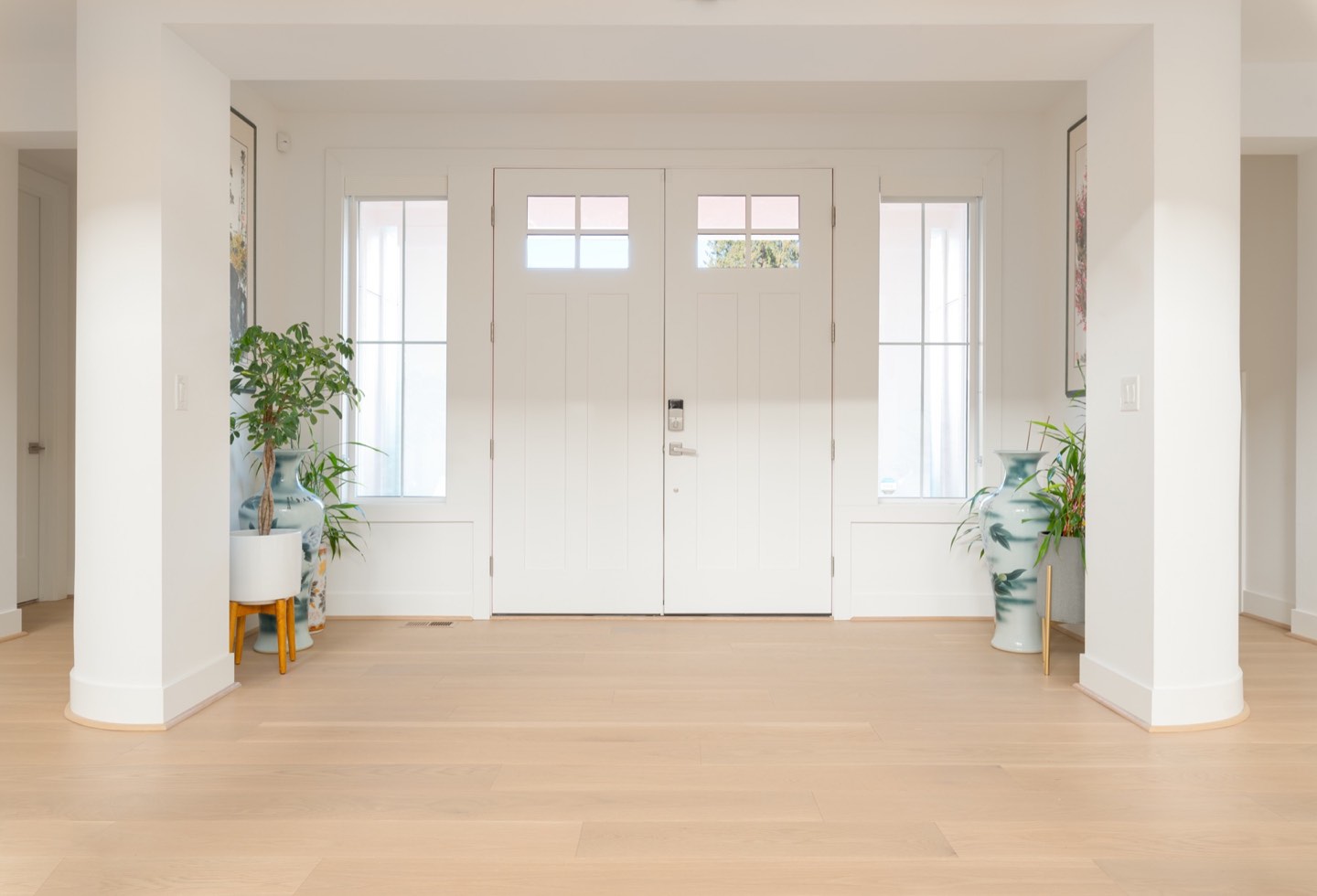
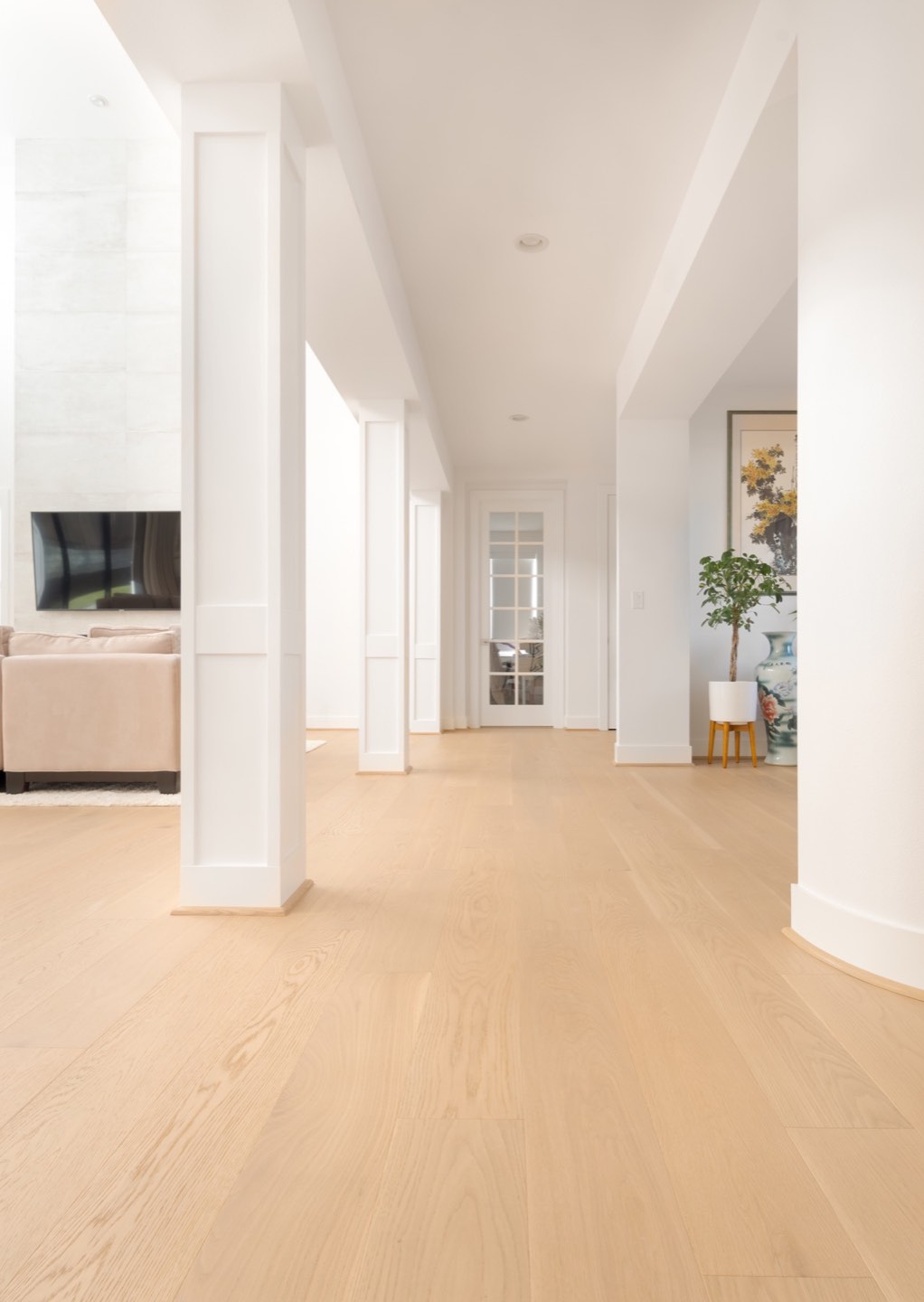
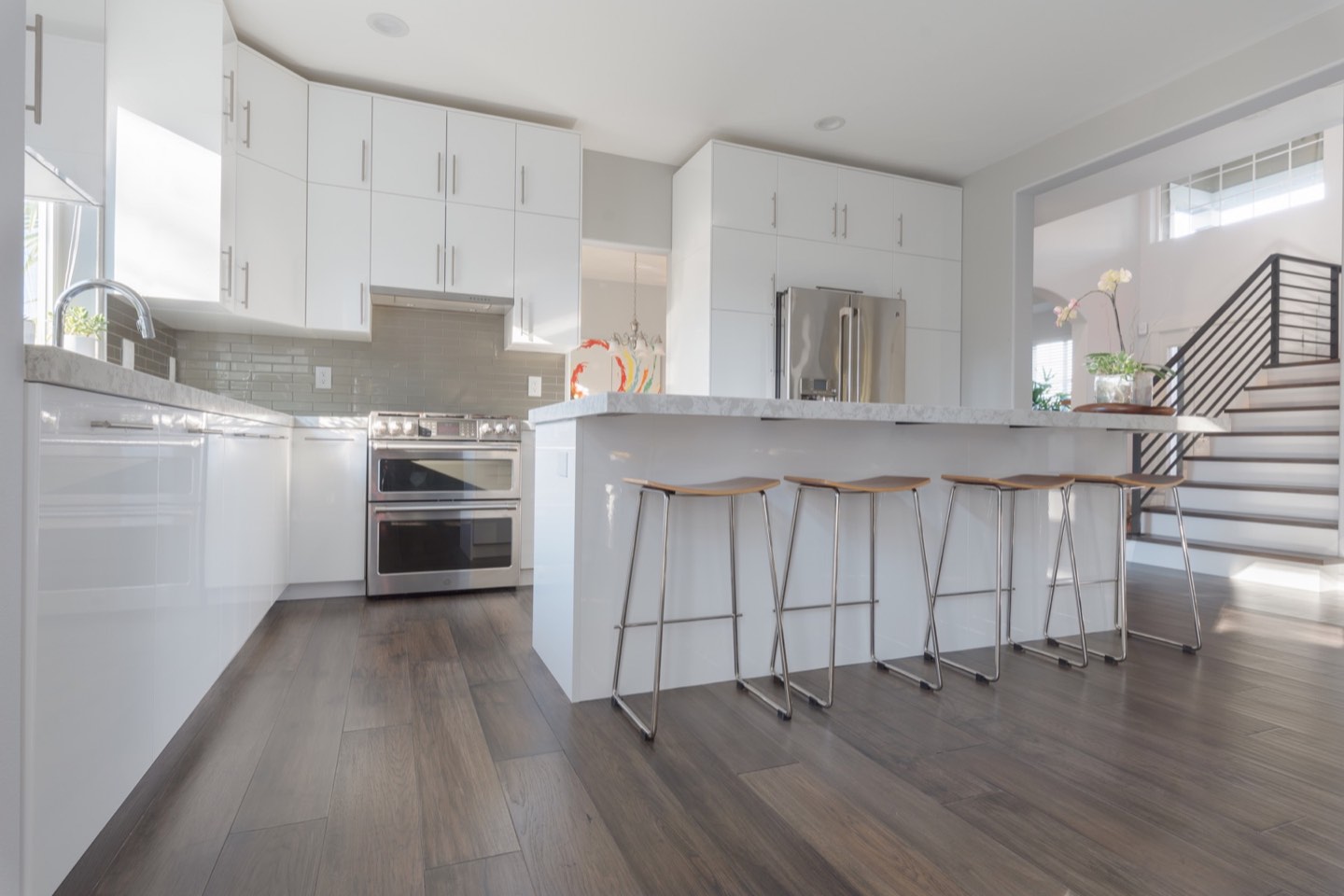
Actual project photographs show the transitions between entries, living spaces and stairs. The material examples elsewhere in this guide illustrate selection options.
Frequently asked questions
Begin with the room, moisture exposure, household traffic, maintenance, desired feel and budget. We compare products against those needs rather than name one material as best everywhere.
Ask for a material-only quote for the product and quantity you need. The order confirms availability, delivery or pickup, quantities, payment and applicable return terms. Installation is included only when it is part of the agreed scope.
Contact the team before ordering or scheduling. We review the product, instructions, quantity, condition and site before confirming acceptance. Product responsibility and installation scope must be agreed in writing.
SPC and WPC describe rigid-core constructions within luxury vinyl. LVP describes a plank format and LVT a tile format. Ask about the specific core, wear layer, backing and installation—not only the initials.
No. A product water claim does not waterproof seams, walls, drains or the subfloor as a complete room. Correct moisture assessment and an appropriate wet-area assembly are separate considerations.
Compare finish performance, expected wear, cleaning and repair options for the selected collection. No floor is scratch-proof. Grit control, furniture protection and prompt spill cleanup remain important.
Sometimes, where each room and the product instructions allow it. Wet areas, stairs, transitions, expansion limits and changes in subfloor may require different details or a different material.
Some products can be refinished, while others cannot. Usable face thickness, core construction, previous sanding and damage must be assessed; total plank thickness alone does not answer the question.
Only when the product and supporting assembly permit it. Review moisture, flatness, bond or stability, added height, transitions and existing damage before deciding whether removal is required.
Only with approval for the specific flooring, heating system and complete assembly. Confirm temperature limits, controls, installation materials, ramp-up and waiting periods. There is no universal thickness range that approves every floor.
The schedule separates selection, delivery, conditioning, preparation, installation and any cure or return-to-use period. Rooms, repairs, patterns, stairs and product availability all affect the scope.
The floor type and assembly determine the sequence. Floating products may not be permitted beneath fixed cabinets or islands; other systems have different requirements. Coordinate the layout before either trade starts.
The product, area, pattern, removal, base preparation, moisture or acoustic components, stairs, trim, furniture arrangements and access all matter. A material-only price is not an installed-project total.
Yes, we can review stair and trim options with the floor. Coordinate species, tone, profile and finish, but do not assume an exact match across different products, lots or aged surfaces.
Your project documents identify applicable workmanship coverage and the selected product warranty. Terms and exclusions differ. Keep product records and follow the approved cleaning and use instructions.
Visit the Kirkland Design Center to discuss available samples and collections for your project. Contact us first for a particular display or product, and request an appointment for focused design or installation planning.
One coordinated home
Local guidance
Compare available materials, finishes and samples with the rest of your room. Bring photographs, inspiration and approximate measurements if available. Call ahead for a specific collection, and request an appointment for focused product and installation planning.
Kirkland, Bellevue, Seattle, Redmond, Sammamish, Issaquah, Mercer Island, Renton, Bothell, Kenmore, Shoreline, Edmonds, Lynnwood, Mountlake Terrace, Lake Forest Park, Woodinville, Duvall, Monroe, Mill Creek, Everett, Mukilteo, Marysville, Snohomish, Arlington, Granite Falls, Sultan, Gold Bar. View current project coverage →
Let’s talk flooring
Tell us your rooms, location and the flooring direction you have in mind.
Use the appointment request form to discuss materials, installation or both. Include your selected material, vendor and the kind of help you need in Project Details.
Photos and rough measurements are helpful but optional. Preferred dates and times are requests until our team confirms availability.
Your request is sent securely through this form. Preferred dates and times are not confirmed until a LeviArs team member contacts you. Read our Privacy Policy.
Open form in a new tab ↗Industry and manufacturer references support this selection guide. The selected collection’s current documents govern its installation, care and coverage.